


Lockdown Girls
0.00.00 Reviews
App Specs
- Version
- 0.1.14
- Updated On
- License
- Free
- Downloads
- 10,000+
- Developer
- FingerFun (HK) Limited
- Categories
- Strategy
- Platform
- Android
Screenshots
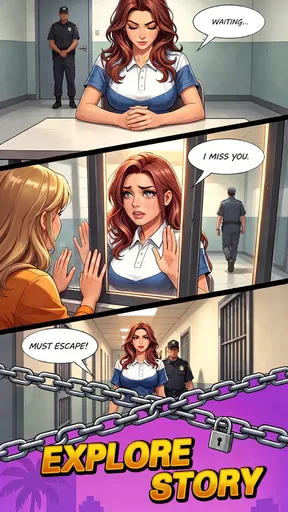



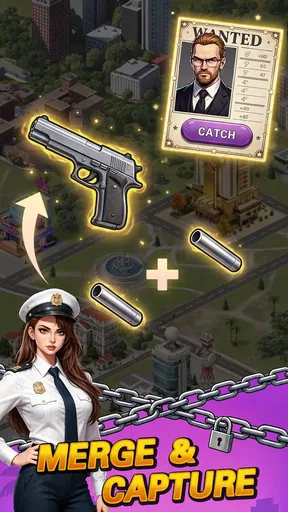
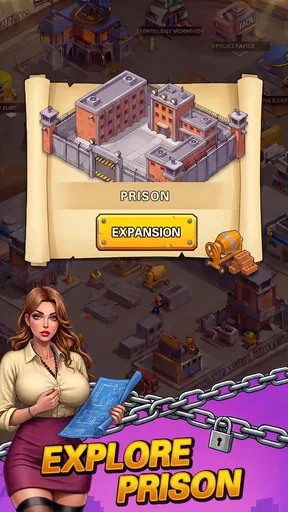
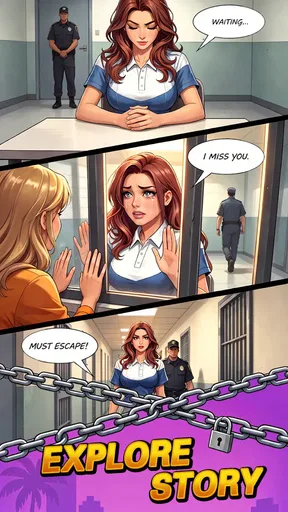

 Analysis by AppCompare
Lockdown Girls is a free strategy game from FingerFun (HK) Limited that combines quick street-racing energy with merge-based progression. I found its central idea easy to understand: combine matching items, improve what is on the board, and use those improvements to move through a more dramatic, character-focused setting. The store summary calls the mix “Street Heat × Satisfying Merge,” while the short description is simply “Lockdown Girls.” Those phrases are brief, but they point toward the game’s real appeal: it is designed for players who enjoy the small satisfaction of turning several modest pieces into one stronger result, with a stylish action backdrop around that routine.
The game is aimed at a Teen audience, so I would approach it as a more mature-looking strategy title rather than a quiet puzzle for young children. It is free to install, although optional purchases range from $0.99 to $199.99 per item. That price range matters because merge games are often built around repeated upgrades and limited resources. I enjoyed the free opening experience, but I would recommend deciding your spending limit before you become invested in a particular character or upgrade path.
Starting Lockdown Girls without feeling lost
The first useful thing to understand is that this is not a conventional racing game where steering skill is the main test. The street setting gives it attitude and momentum, but the important decisions happen through the strategy layer. You are looking for useful combinations, choosing when to improve something, and deciding whether a short-term gain is worth consuming pieces that might be more valuable together later.
That distinction changes how I recommend approaching the opening. If you arrive expecting a full driving simulator, the presentation may seem more active than the actual controls. If you arrive expecting a merge strategy game with a street-themed wrapper, the rhythm makes much more sense. The best moments come from planning a small chain of improvements instead of tapping every available option immediately.
The game runs on Android devices using Android 8.0 or later. On a compatible phone, the sensible first step is to let the opening sequence establish the board and the basic interaction before trying to optimize anything. I would resist the temptation to spend immediately. Early rewards are most useful when they teach you what the game considers a valid combination and how the resulting upgrade affects your next move.
My first meaningful goal was not to clear everything on the screen. It was to create one upgrade deliberately, then pause and inspect what changed. That simple habit prevents a common beginner mistake: merging whatever is closest together without considering the space left behind. In a board-based strategy game, an apparently helpful combination can make the next few turns awkward if it leaves isolated pieces in inconvenient positions.
What the opening teaches you
The early game works best when treated as a short lesson in priorities. First, identify which items can be combined. Next, check whether the combination opens room for another action. Finally, decide whether the new result should be used right away or kept as part of a larger plan. This three-step rhythm feels slower than random tapping, but it produces more reliable progress and makes the board easier to read.
Worth Reading Before You Choose

Flipboard Shows What News Apps Must Do Beyond the Feed

Switching to Android Auto Means Rethinking Your Driving Routine

Google Calendar Makes a Crowded Week Easier to Manage

Ludo King Makes the Most of the Minutes Between Plans

Baby Panda World Brings Quick Play to Modern Phones, but Its Game Library Feels Busy

ESPN’s Live Game View Makes Following Close Games Easier
A useful beginner workflow is to keep one area of the board relatively organized. I found that grouping similar pieces by type or upgrade level makes future combinations easier to spot. It also gives you a visual warning when you are about to create clutter. This is a small technique, but it is one of the first places where the strategy element becomes more than simple matching.
Another practical tip is to avoid treating every available action as equally urgent. The street-racing presentation can make the game feel fast, yet the merge decisions reward a measured approach. When I slowed down and looked for the next two possible combinations rather than only the immediate one, I made fewer wasteful moves. That is especially helpful for a first-time player who is still learning how the game’s progression is arranged.
The character presentation also affects how the opening feels. Lockdown Girls is not just a neutral grid with anonymous shapes; its identity comes from placing the merge routine inside a more stylized, action-oriented world. Players who enjoy character-driven mobile games may find that atmosphere gives ordinary upgrades more motivation. Players who prefer purely abstract puzzles may care less about that layer and judge the game almost entirely by how satisfying the board interactions feel.
The first successful action and why it matters
Your first successful merge should be treated as a test of the whole loop, not merely as a tutorial checkbox. Watch what the game asks you to combine, what result appears, and what the result enables next. That information tells you whether progression is based on building upward through repeated combinations, completing objectives, or balancing both. Learning this early is more valuable than trying to rush toward a higher-looking item.
I also recommend checking the board after every important upgrade instead of immediately repeating the same gesture. A new piece may change which combinations are practical, and it may alter how much open space you have. The strongest early habit is to leave yourself options. If you merge two items and create a stronger one, do not automatically place or use it in the first available spot. Consider whether keeping it nearby will make the next combination easier.
This is where the game can feel satisfying for short sessions. A player waiting for a bus or taking a brief break can complete one small chain without needing to commit to a long campaign session. At the same time, the strategy layer gives the interaction enough thought to make repeated visits feel more purposeful than a simple reflex game.
There is a trade-off, though. Merge progression can become repetitive when the board offers familiar combinations without introducing a meaningful decision. In my experience, the game is most engaging when I am choosing between two useful outcomes or managing limited room. If your ideal strategy game is built around deep unit placement, complex diplomacy, or long tactical battles, this will probably feel lighter and more compact.
Confusion points that can slow new players down
The biggest source of confusion is the contrast between the game’s energetic theme and its deliberate core. The title and street setting suggest constant action, but success depends more on arranging and combining than on quick reactions. New players should not assume that tapping faster will improve results. It is better to understand the board’s logic and preserve useful pieces.
Another easy mistake is spending a resource simply because the game presents an available upgrade. In a free-to-play strategy game, an immediate improvement can be tempting, especially when the interface makes it feel like the obvious next step. I prefer to ask whether the purchase or upgrade solves a problem I actually have. If the board is already manageable, saving resources can be more valuable than accelerating one isolated improvement.
The in-app purchase range makes this caution especially relevant. The game can be downloaded and played without an upfront price, but optional items may cost from $0.99 up to $199.99 each. I would not recommend making a purchase during the first session. Give yourself time to learn the normal pace, identify which resources genuinely limit you, and decide whether the convenience is worth paying for.
Teen-rated presentation is another point worth considering before handing the game to a younger player. The rating tells me that its tone and imagery are not aimed at small children, even though the merge interaction itself is easy to understand. Parents should look at the game’s presentation and spending controls directly rather than assuming that a puzzle-like mechanic makes the entire experience child-friendly.
People also ask whether a newer phone is necessary. The stated minimum is Android 8.0, so the practical starting point is simple: check that your device meets that operating-system requirement. Beyond that, I would judge the experience by how comfortably the game runs on your own phone. A strategy game built around short interactions is much less enjoyable if the device struggles with loading or touch response, but there is no reason to replace a phone merely for this title if compatible games already run well on it.
How to build a better routine after the first session
Once the opening is familiar, I would split play into two modes. In the first mode, focus on learning and completing the next clear objective. In the second, focus on efficiency: preserve space, avoid unnecessary combinations, and think about what your next few actions might be. Mixing those goals constantly can make the game feel confusing, because experimentation and optimization require different attitudes.
One non-obvious advantage of this approach is that it helps reveal whether you enjoy the game’s actual loop or only its presentation. If you still like organizing the board after the novelty of the street theme fades, the strategy foundation is doing its job. If the merge actions feel like an interruption between character moments, you may be better served by a more traditional action game or a deeper standalone puzzle title.
I would also use the game as a low-pressure planning exercise rather than trying to maximize every move. The strongest decision is not always the one that creates the highest immediate item. Sometimes maintaining several compatible pieces gives you more flexibility than making one impressive combination. That trade-off is easy to miss because visible upgrades feel rewarding, but flexibility usually matters more when the board begins to fill.
For an everyday scenario, imagine opening the game during a ten-minute break. I would start by checking the board, making one planned combination, and then deciding whether the resulting position leaves a clean next move. If it does, continue the chain. If it does not, stop rather than forcing a poor action. This makes the game fit short sessions without turning every break into a rushed attempt to clear the entire board.
For a longer session, I would set a specific purpose before starting: learn a new progression step, tidy the board, or test whether a particular upgrade improves the next sequence. That keeps the session from becoming aimless tapping. It also makes the game’s free-to-play structure easier to evaluate, because you can tell whether you are progressing through decisions or simply waiting for convenience items.
Who will enjoy it, and who should choose something else
The best reason to try Lockdown Girls is the combination of approachable merging and a more energetic street-game identity. I can recommend it to players who like visible progression, compact strategy decisions, and character-focused mobile presentation. It is particularly suitable for someone who wants a game that can be understood quickly but still rewards a little planning once the board becomes busy.
It is less suitable for players who dislike free-to-play pressure, even when optional purchases are not required for the basic appeal. Anyone who wants a completely self-contained premium experience may prefer a paid puzzle game with no purchase prompts. Likewise, players looking for competitive racing controls, realistic driving, or deep tactical combat should choose a game built specifically around those systems instead of expecting this title to provide them.
Compared with a standard match-three game, this feels more focused on building upward through combinations and managing the resulting space than on clearing a fixed pattern for points. Compared with a traditional strategy game, it is more immediate and less demanding, with decisions that can fit into a short phone session. That middle position is its strength, but also its limitation: it may not offer enough complexity for a dedicated strategy enthusiast, while still being more involved than someone seeking a purely relaxing casual game wants.
The current version is 0.1.14, which gives the experience an early-stage feel in the way I assess it. I would approach it as a game to explore for its present merge-and-street concept rather than assuming it already has the breadth of a long-established strategy franchise. FingerFun (HK) Limited has chosen a clear foundation, and the value depends on whether that foundation holds your attention through repeated upgrade cycles.
My recommendation after playing
Lockdown Girls works when I play it patiently. The satisfying part is not simply seeing two pieces become one; it is arranging the board so that one decision creates another useful possibility. The street atmosphere and character framing give the routine more personality, while the strategy comes from choosing when to combine, when to wait, and when not to spend.
I would install it if you want a free strategy game for short sessions and enjoy merge mechanics with a more dramatic visual identity. I would begin without spending, organize the opening board, and use the first few sessions to learn the natural pace of progression. That approach gives you a fair view of the game before optional purchases influence your expectations.
My final view is positive but measured. The game has a clear hook and an accessible first step, yet its long-term appeal depends on how much variety and decision-making you want from repeated merging. For a newcomer, the path to the first rewarding action is reassuringly simple: combine carefully, watch the result, preserve space, and plan one move ahead. If that small cycle feels satisfying to you, this free release is worth trying; if you need deep racing controls or a fully premium strategy experience, another category-specific alternative will be a better fit.
Pros
- Simple controls make the game easy to pick up.
- Short levels are convenient for quick gaming sessions.
- The visual style is colorful and easy to recognize.
- Offline play is useful when you have no internet access.
- Progression gives players a reason to keep completing levels.
Cons
- Ads may interrupt gameplay or appear between levels.
- Some stages can feel repetitive after extended play.
- Difficulty may increase suddenly in later sections.
- Limited customization reduces long-term personalization.
- In-app purchases may be needed for a smoother experience.
FAQs for Lockdown Girls
What is Lockdown Girls, and what kind of experience does it offer?
Lockdown Girls is a mobile game centered on an interactive, character-driven experience set during a lockdown-themed scenario. Players typically progress through conversations, decisions, and story events involving the game’s characters. The exact gameplay can vary by version, so it is worth checking the official store description, screenshots, age rating, and update notes before downloading to confirm that the content and style match your expectations.
Is Lockdown Girls free to download and play?
The app may be available as a free download, but users should check whether it includes advertisements, optional purchases, premium chapters, or other paid content. Some story-based games provide an initial section at no cost and then require payment to unlock additional features or episodes. Before installing, review the listing’s in-app purchase information and make sure purchase restrictions are enabled if children may use the device.
What age rating and content should users expect?
Because Lockdown Girls focuses on character interactions and a lockdown-related setting, some scenes, dialogue, themes, or visual material may not be suitable for every audience. The appropriate age rating can differ between Android and iOS and may also change after updates. We recommend reading the official rating details and privacy information carefully, especially before allowing younger users to access the game.
Does Lockdown Girls require an internet connection?
The connection requirements depend on how the particular version is designed. Basic menus or previously downloaded content may work offline, while advertisements, account services, cloud saves, updates, or certain story elements may require internet access. After installation, check the game’s behavior in airplane mode and review its permissions. A stable connection is recommended when downloading updates or restoring purchases.
Is Lockdown Girls safe to install on Android or iPhone?
For the safest installation, download Lockdown Girls only through the official Google Play Store or Apple App Store, rather than from unofficial APK websites or modified download links. Check the developer name, recent reviews, requested permissions, privacy policy, and update history before installing. Avoid versions that ask for unnecessary access to contacts, messages, microphone, or files, and keep your device’s operating system updated.


